Episode Summary
Welcome to the Napa Legal Podcast, where we discuss religious liberty from the perspective of faith-based nonprofits.
In this week's episode, Frank DeVito and Kyle Nazareth discuss Texas adding scripture to its K–12 public school reading list, the Massachusetts Supreme Judicial Court blocking statues of St. Michael and St. Florian from a Quincy public safety building, and a divided Ninth Circuit reviving a Wiccan inmate's claim over confiscated ritual items.
In this episode, we discuss:
[1:09] Texas adds selections from scripture to its K–12 reading list alongside the classic literature, and Frank argues the law sits comfortably inside the Establishment Clause — that Mahmoud v. Taylor did not forbid assigning texts at all but turned on parental notice and the normative character of the material, that Abington v. Schempp expressly preserved the Bible's literary and historic value, and that the first public schools went considerably further than anything Texas is now attempting.
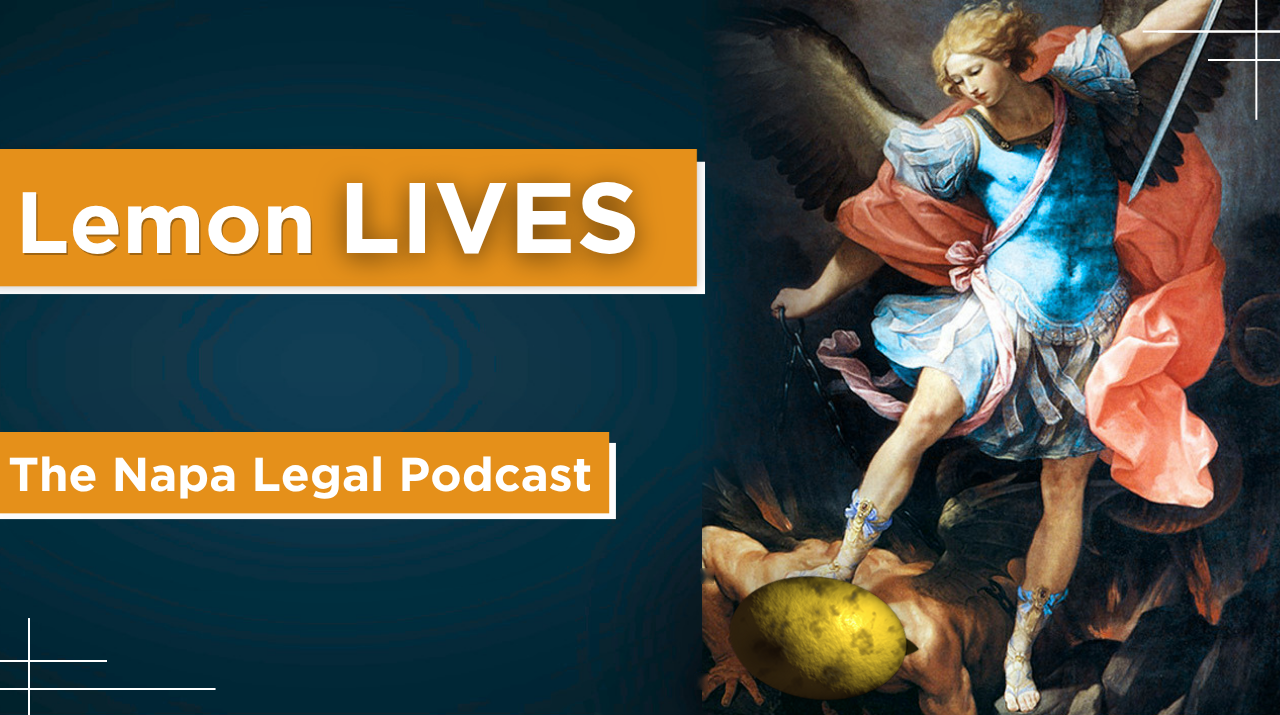
[11:33] The Massachusetts Supreme Judicial Court unanimously upholds an injunction against two ten-foot bronzes commissioned for Quincy's public safety building, applying a Lemon-derived state framework years after Kennedy v. Bremerton discarded it, and reaching the strange conclusion that the statues fail largely because they are new — turning American Legion, our most monument-friendly precedent, against them.
[26:05] A divided Ninth Circuit panel revives a Wiccan inmate's First Amendment and RLUIPA claims over a confiscated altar cloth and medallion the dissent notes cost twelve dollars each, which Frank uses to raise the question sitting underneath the case: whether courts can coherently protect the free exercise of religion without a workable definition of religion. Kyle answers from natural theology and the founders' laws of nature and of nature's God.
Chapter markers
0:00 Intro
1:09 Texas adds scripture to the K–12 curriculum
1:39 Jonah, Job, and the Sermon on the Mount
2:10 The Ten Commandments law and Nathan v. Alamo Heights
2:56 Does Mahmoud v. Taylor apply?
3:26 Why the Mahmoud texts were different
4:15 Abington School District v. Schempp
4:59 The Bible's literary and historic qualities
6:14 The first public schools were explicitly Protestant
7:23 Neutral proceduralism vs. substantive goods
8:20 Not all ideas are equal
10:06 Kyle: what is education actually for?
11:33 Massachusetts: FitzMorris v. City of Quincy
12:31 Two bronzes, fifteen plaintiffs, three organizations
13:49 The SJC rules on August 20
14:18 Article 3 and Michael McConnell's brief
15:17 A state court applies Lemon after Kennedy
15:46 Colo v. Treasurer and Receiver General
17:42 Federal protection is a floor, not a ceiling
18:12 The free exercise ceiling and Masterpiece Cakeshop
19:09 The absurdity of the Lemon test
19:39 Becket's secular purpose argument
21:07 American Legion and the Bladensburg Cross
22:03 Too new to protect
23:35 Can a state court use an overruled federal test?
24:29 Picking and choosing religious symbols
26:05 Goff v. Rode in the Ninth Circuit
27:29 A 2–1 reversal of summary judgment
29:08 The dissent and the $12 replacement
30:38 Resolved on the wrong element
32:12 What is a religion?
32:49 Employment Division v. Smith
34:07 Madison and "the duty we owe our Creator"
35:25 Where Wicca would fall
36:28 Kyle: natural theology and the unmoved mover
37:56 Aquinas, Blackstone, and the American founding
39:41 Natural law theorists and originalists agree
40:39 "If anything's a religion, then nothing's a religion"
The Napa Legal Podcast, August 25, 2026
#freedomofreligion #religiousliberty #establishmentclause
Other Episodes
.png)
.png)