Episode Summary
Welcome to the Napa Legal Podcast, where we discussreligious liberty from the perspective of faith-based nonprofits.
In this week's episode, Frank DeVito and Kyle Nazarethdiscuss a North Carolina elementary school that refused to let Christianparents opt their children out of a music class taught by a male teacher whoidentifies as a woman, and threatened to discipline students who won't usefemale pronouns and titles; the Ninth Circuit's full-court rehearing of UnionGospel Mission of Yakima v. Brown, a case asking whether Christian ministriescan require all employees, not just ministers, to share their faith; and theSupreme Court's decision to hear Missionaries of St. John the Baptist v.Frederick, a Kentucky case over a zoning board blocking a Marian grotto onchurch property, in which Napa Legal filed an amicus brief urging the Court totake the case.
In this episode, we discuss:
[1:15] Union Gospel Mission of Yakima v. Brown, in which aChristian ministry serving the homeless and addicted challenges WashingtonState's 2021 reinterpretation of its anti-discrimination law, which limited thereligious hiring exemption to ministerial positions. Frank explains how a NinthCircuit panel ruled that the church autonomy doctrine protects faith-basedhiring even for non-ministerial staff.
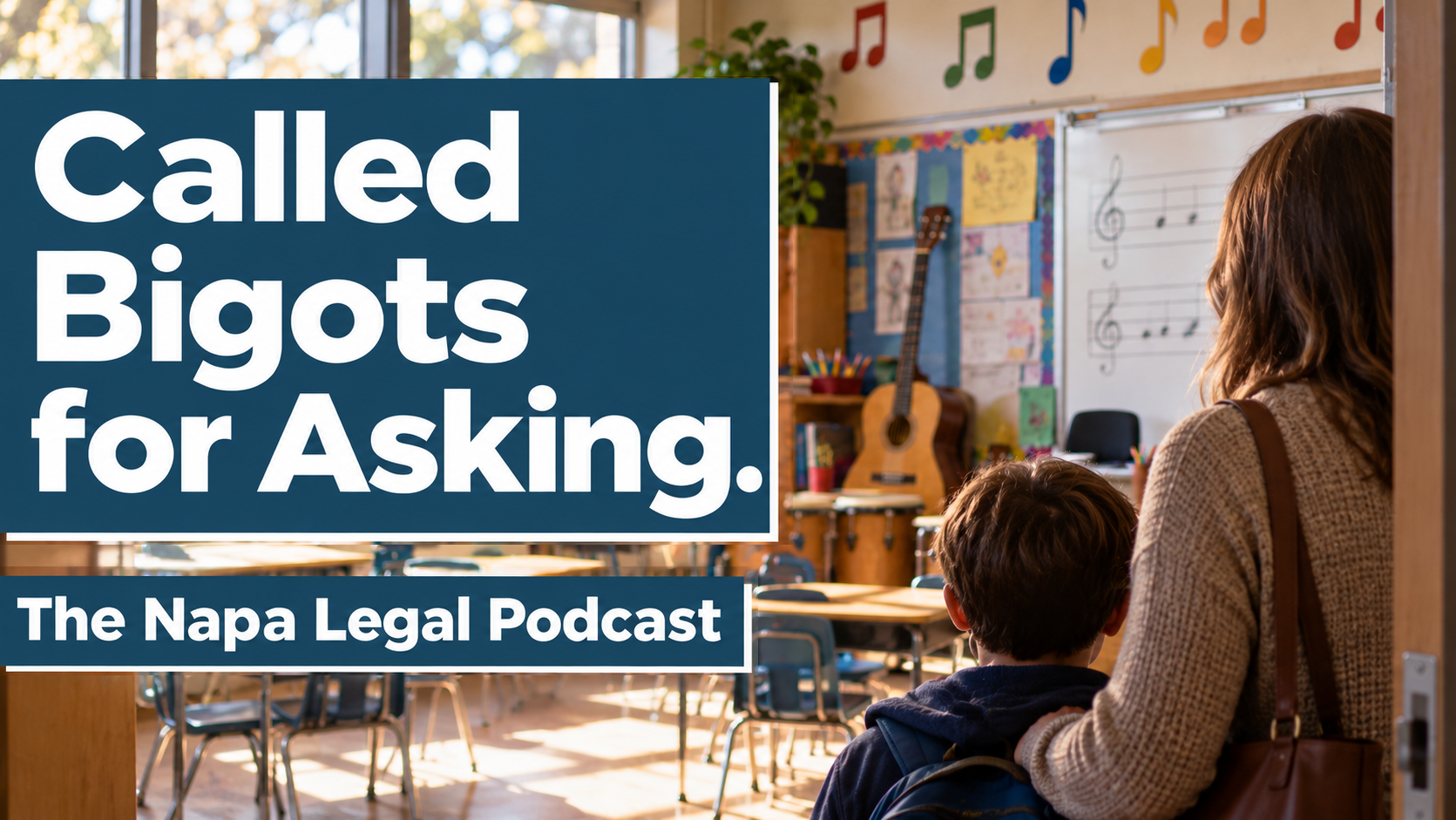
[12:25] Parents at Middle Creek Elementary in Wake County,North Carolina, represented by the Thomas More Society, demand religiousaccommodations after the school hired a male music teacher who identifies as awoman, denied every opt-out request, and said it may discipline students whouse male pronouns. Kyle argues that the teacher's presence in the classroom isitself a form of instruction.
[28:56] Missionaries of St. John the Baptist v. Frederick,in which the Supreme Court has agreed to decide whether a land use regulationthat bars a religious institution from building a religious structure on itsown property is a "substantial burden" on religious exercise underthe Religious Land Use and Institutionalized Persons Act (RLUIPA). Frankexplains why the Sixth Circuit's Livingston test sets that bar so high that thestatute rarely protects anyone.
Chapter markers
0:00 Intro
1:15 Union Gospel Mission of Yakima v. Brown
2:34 Washington narrows its religious hiring exemption
4:21 The Ninth Circuit panel's church autonomy ruling
5:16 The full Ninth Circuit rehears the case
6:39 Justice Thomas: should courts decide who is a minister?
9:31 Why Napa Legal hires only practicing Catholics
10:24 Headed to the Supreme Court?
11:30 Kyle: InterVarsity and church autonomy beyondministers
12:25 North Carolina parents and a transgender music teacher
13:21 A student corrected for saying "Mr."
15:17 Opt-outs denied and parents called bigots
16:13 The Thomas More Society demand letter
17:10 Why Bostock v. Clayton County doesn't decide this
18:07 Religious hostility and the Lukumi case
19:03 Wisconsin v. Yoder, Mahmoud v. Taylor, and Mirabelli
22:23 Is the teacher part of the curriculum?
23:22 Aristotle on how children learn through habit
24:20 René Girard and mimetic desire
25:57 Frank: compelled speech and extending Mahmoud
27:45 Should parents be able to opt out of any public schoolclass?
28:56 The Supreme Court takes the Marian grotto case
30:40 Napa Legal's amicus brief and RLUIPA
31:38 The Livingston substantial burden test
33:03 The question the Court agreed to decide
34:16 Why a grotto ban burdens religious exercise
36:04 "Build it smaller, build it elsewhere"
38:15 Kyle: Groff v. DeJoy and the undue hardship parallel
40:26 Wrap-up and Good Counselor Project applications
Lawyers: applications for the Good Counselor Project, NapaLegal's fellowship for Christian attorneys, are open until December 1. Learnmore at https://www.napalegalinstitute.org/
The Napa Legal Podcast, October 6, 2026
#religiousliberty #parentalrights #freedomofreligion
Other Episodes
.png)
.png)
