Napa Legal Institute Warns of Need for Robust State-Level Religious Freedom Protections Regardless of Which Party Controls Government
For Immediate Release: November 16, 2026
Media Inquiries: frank.devito@napalegalinstitute.org / eparker@crcadvisors.com VIEW FFI MATERIALS HERE FFI RANKINGS ONE PAGER
WASHINGTON, D.C. - Today, Napa Legal Institute released its 2026 Faith and Freedom Index and reminded Americans that it is not merely the Supreme Court or Congress that affects religious freedom. The laws passed by states, many of which would not turn heads as important to religious freedom, can drastically affect the ability of faith-based nonprofits to accomplish their missions.
State laws play a major role in determining whether local religious institutions (from churches and religious schools to pregnancy resource centers and homeless shelters) are able to form, operate, and thrive, no matter what the political leadership of the day looks like. The Index scores state laws that affect faith-based, federally tax-exempt nonprofits and analyzes those laws across all 50 states and Washington, DC.
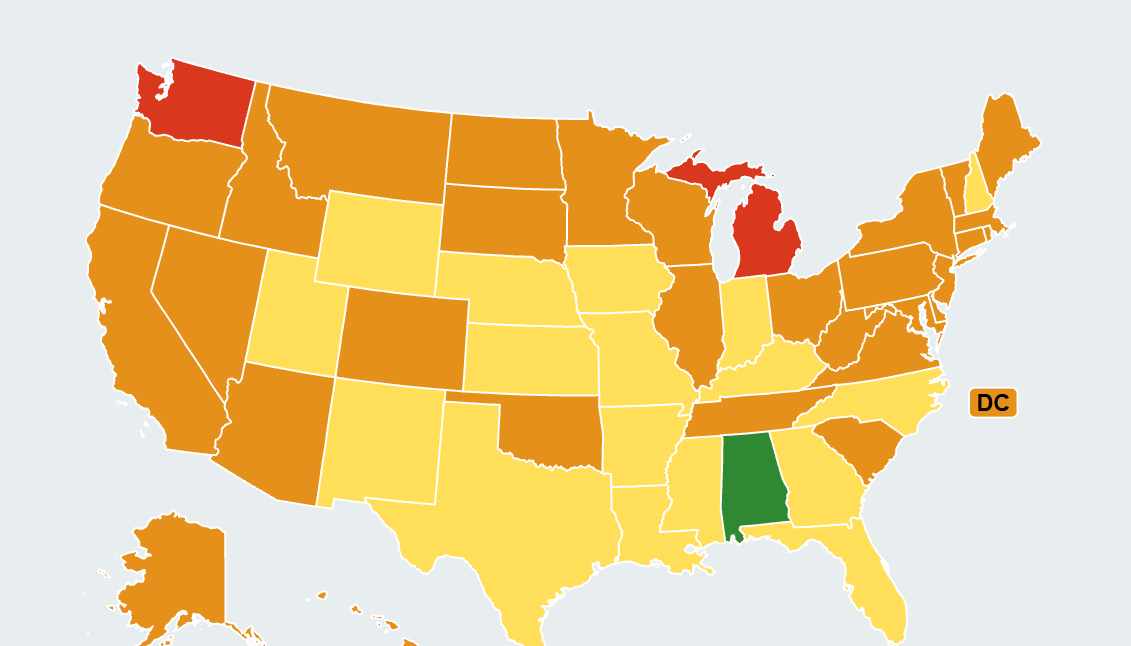
The results do not neatly fall along partisan lines. There are “blue states” that have some important religious freedom and regulatory protections for faith-based nonprofits, as well as “red states” that have much room for improvement. For example, New York state receives a higher score than North Dakota, South Carolina, and Tennessee. Connecticut and Illinois have religious freedom restoration acts while Alaska and Ohio do not. And Hawaii and Maine have stronger employment law protections for religious organizations than South Dakota and West Virginia.
Napa Legal’s Senior Counsel and Director of Content Frank DeVito notes:
“Some of the most important laws that promote the work of religious organizations are not the 'hot-button' issues one would expect. Creating a better legal landscape for religious organizations through everything from stronger religious freedom restoration acts and religious exclusions from burdensome 'nondiscrimination' laws to proper exemption from regulations and state taxes, are crucial in allowing religious organizations to focus on their mission rather than time and resource-consuming legal compliance requirements.
DeVito concludes, “Every good state law that helps rather than hinders the work of religious organizations is a victory. Through the Faith and Freedom Index we will continue to track and celebrate those victories. The Index, year after year, will remain an important tool to protect and foster the work of religious organizations in particular and religious freedom in general. Voters should consider how the laws in their states burden religion when they cast their votes. Government leaders and Policymakers should focus on ensuring that religion can serve its proper role in contributing to the common good. Through the Faith and Freedom Index we will continue to track and celebrate those victories.
The Faith and Freedom Index evaluates 15 different areas of state laws that affect faith-based nonprofits, rates the laws of all 50 states (plus Washington, DC), and provides scores for each state. The highest overall scores went to Alabama and Indiana, while the lowest overall scores went to Michigan, Washington, and Massachusetts. The Index is an important tool for policymakers to see which states are leading the way on religious freedom and can be taken as examples to improve the law.
Some states have made progress since the last version of the Index was released in 2025. For example, Florida amended its nonprofit corporation laws to explicitly state that directors of a corporation engaged in religious activity are permitted to rely on religious authorities (such as priests, ministers, and rabbis) when receiving advice related to religious questions concerning the corporation.
Massachusetts recently raised the annual revenue threshold at which nonprofits that fundraise in the state must conduct a third-party audit from $200,000 to $500,000; Rhode Island similarly raised the threshold for an audit from $500,000 to $1,000,000.
Every state that passes a law improving the religious liberty landscape for faith-based nonprofits is a victory for society. We continue to encourage state legislatures to learn from the model laws in other states highlighted in the Index so that religious organizations across the nation can continue to flourish.
The mission of Napa Legal is to help religious organizations succeed in accomplishing their crucial missions. Through its All Access platform and Good Counselor Project, Napa Legal equips religious organizations and faith-based attorneys with the resources, skills, and networks they need to succeed, while providing a valuable policy resource through the Faith and Freedom Index.
—
Napa Legal educates faith-based nonprofit leaders on general corporate and legal issues by publishing resources such as issue reports, webinars, and sample documents. Read more here.
For further information, please contact Frank DeVito at frank.devito@napalegalinstitute.org or Emma Parker Wood at eparker@crcadvisors.com.